
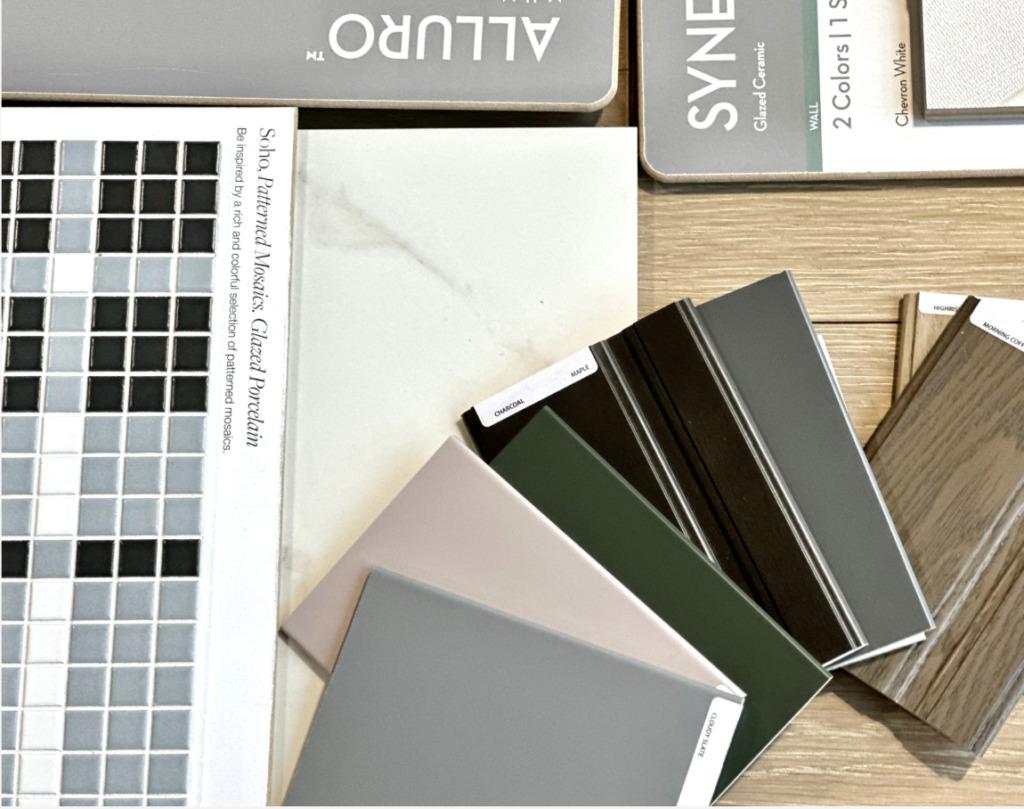
If you’ve ever stared at a tile sample, cabinet knob, or paint swatch and suddenly felt frozen — you’re not indecisive. You’re overwhelmed.
In this episode of Designing in 5D, I sat down with Anna Hackathorn, an award-winning interior designer with over 30 years of experience and the founder of Plan and Elevate, to talk about something that shows up in almost every project but rarely gets named out loud: design paralysis.
We didn’t talk about trends.
We didn’t talk about “what’s in.”
We talked about what actually causes projects to stall, budgets to balloon, and homeowners to feel emotionally exhausted before demo even begins.
And the answer, almost every time, is this: a lack of clarity upfront.
What Design Paralysis Really Is (and What It Isn’t)
Most people assume design paralysis means you don’t know what you want.
In reality, it usually means:
-
You’re making hundreds of decisions on top of real life
-
You’re being asked to decide things out of sequence
-
You don’t understand how one decision impacts the next
-
You’re afraid of making a mistake you’ll live with for 20+ years
Design paralysis is decision fatigue, not bad taste.
By the time a client freezes on something “small” — like cabinet hardware or grout color — it’s often because they’ve already made dozens of major decisions without a clear framework holding them together.
And that’s where things start to unravel.
Why “We’ll Figure It Out As We Go” Gets Expensive Fast
One of the biggest myths in remodeling and new construction is that decisions can be made along the way.
They can — but they shouldn’t.
When decisions are made after demo starts:
-
Timelines stretch
-
Trades get delayed
-
Backorders become emergencies
-
Budgets lose their guardrails
-
Stress skyrockets for everyone involved
Anna and I both see this constantly: clients who are smart, capable, and successful in their own careers suddenly feel completely underwater in a design project.
Not because they’re failing — but because the process is backwards.
Good design isn’t reactive. It’s preemptive.
The Hidden Cost of “Half DIY, Half Designer”
Another common contributor to paralysis is what we call the “in-between” approach.
Some clients want to:
-
Pick certain items themselves
-
Have a designer “fill in the gaps”
-
Avoid markup by sourcing on their own
On paper, it sounds flexible.
In practice, it often gets messy.
Why?
Because every early decision affects the rest of the design — scale, finish, proportion, lighting, flow. When pieces are chosen in isolation, the overall result loses cohesion, and clients often feel disappointed even though they “saved money.”
Clarity around roles — who is sourcing, who is specifying, who is responsible for what — isn’t rigid. It’s protective.
Why Designers Can’t “Just Give You a Number”
One of the most frustrating moments for homeowners is asking, “How much will this cost?” and not getting a straight answer.
Here’s the honest truth: design is custom, and cost is subjective.
Two clients can want the “same kitchen” and end up with vastly different budgets based on:
-
Material expectations
-
Finish priorities
-
Appliance preferences
-
Long-term goals
-
Where they want to splurge — and where they don’t
Designers don’t avoid budgets — we build them. But building a real budget requires decisions first, not guesses.
That’s why planning before construction isn’t a luxury. It’s a safeguard.
Decision Fatigue Hits Even the Most Confident Clients
One of the most important moments in the episode was this realization:
even clients who say, “I’m great at making decisions,” eventually hit a wall.
It might not happen on tile or countertops.
It might happen on cabinet hardware.
Or lighting placement.
Or paint sheen.
By that point, the brain is tired.
That’s why sequencing matters so much. When decisions are made intentionally, in the right order, clients feel supported instead of pressured.
Design should feel expansive — not like an emergency room.
Why Projects Take Longer Than You Think (Even When Everyone Is Good)
Another contributor to paralysis is timeline pressure.
Clients often underestimate:
-
How long design development takes
-
How many rounds of refinement are normal
-
How subcontractor schedules actually work
-
How one delay creates a domino effect
Even the most experienced designers and contractors encounter surprises. The difference is knowing how to adapt without panic.
When expectations are set honestly from day one, delays feel manageable instead of catastrophic.
The Designer’s Real Role: Translator, Buffer, Advocate
Interior designers don’t just pick finishes.
We:
-
Translate between client vision and contractor execution
-
Catch problems before they become expensive mistakes
-
Reduce emotional load during stressful phases
-
Help clients zoom out when they’re stuck in the weeds
-
Protect the integrity of the original vision
In many ways, designers are the calm center of the storm — holding clarity when everything feels noisy.
And that clarity changes everything.
The Biggest Takeaway: Clarity Is the Ultimate Luxury
At the end of the day, this episode wasn’t about fear — it was about permission.
Permission to:
-
Slow down before starting
-
Ask better questions upfront
-
Make decisions with context
-
Trust the process
-
Stop expecting yourself to do this alone
Design paralysis doesn’t mean you’re failing.
It means you need a clearer path forward.
And that’s exactly what intentional design is meant to provide.
Listen to the full episode of Designing in 5D
You’ll hear real stories, hard truths, and practical insight that will change how you approach your next project — whether you’re remodeling, building new, or simply feeling stuck.
And if you’re ready to take the first step with clarity, download our Decision Confidence Toolkit — a free resource designed to help you move forward with intention, not overwhelm.
Because good design isn’t rushed.
It’s designed — thoughtfully, clearly, and with purpose.