
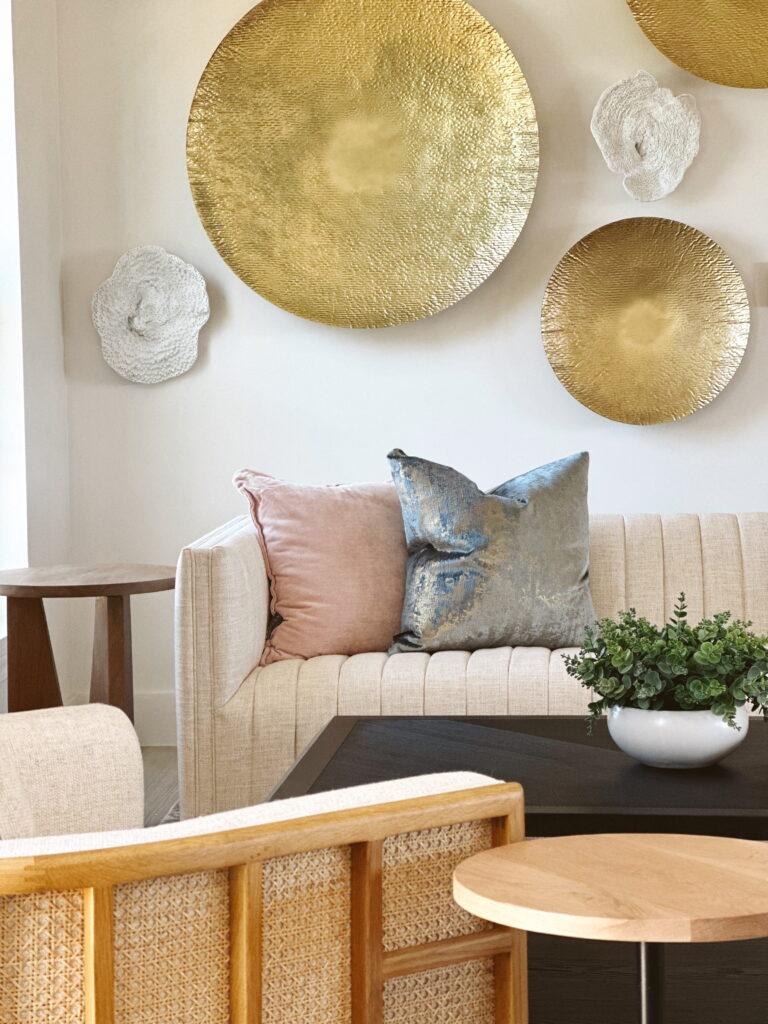
Why Beauty, Faith, and Intention Belong in Your Home
Home is not just a backdrop.
It’s the atmosphere you breathe.
It shapes your mood, your energy, your relationships, and your ability to rest.
In this episode of Designing in 5D, I sat down with interior designer, artist, and author Sarah Trop, founder of Fun Cycled Design Company and author of Designing Spaces That Renew the Soul. What unfolded was one of the most grounding, affirming conversations we’ve had on the podcast — about faith, creativity, hospitality, trauma-informed design, and why beauty is not vanity… it’s language.
If you’ve ever wondered whether caring about your home really matters, or if you’ve felt a quiet tension between faith and aesthetics, this conversation offers deep clarity and permission.
Beauty Is Not Luxury — It’s Language
One of the most powerful ideas Sarah shared is this:
If we are made in God’s image — and God is the ultimate creator — then beauty cannot be meaningless.
Look at creation.
Color. Texture. Rhythm. Order. Light.
If God did not care about environment, He would not have taken such care in designing it.
Yet many people — especially within faith communities — have been told that caring about design is frivolous or vain. Sarah wrote this book specifically to challenge that misconception. Not to encourage excess or waste, but to reframe design as something deeply human, deeply spiritual, and deeply formative.
Our environments shape how we feel, how we connect, how we rest, and how we show up for one another.
A Childhood Rooted in Hospitality
Sarah’s belief that home matters didn’t come from a design school — it came from lived experience.
Both of her parents were adopted, which created a deep intentionality around family, belonging, and welcome. Her father was a pastor, and their home was often filled with people they barely knew — sometimes people with nowhere else to go.
Her mother, working with very little, still made their home beautiful. Not expensive. Beautiful.
Secondhand finds. Reused wallpaper. Warmth. Care.
The message wasn’t spoken — it was lived:
Home is where people feel safe, seen, and welcomed.
Why She Felt Called to Write This Book Now
Sarah didn’t always plan to write a book about design. In fact, she tried writing a memoir first — and it never quite landed.
What finally pushed her forward was a recurring question she kept hearing:
“Does design really matter?”
“Isn’t caring about your home just vanity?”
Even hearing it from friends.
Instead of reacting defensively, Sarah stepped back and realized the root issue wasn’t criticism — it was misinformation.
Design affects us emotionally, physically, and spiritually. Trauma-informed design, color psychology, texture, light, and organization all have measurable impacts on cortisol levels, nervous system regulation, and emotional well-being.
Her book bridges science, faith, and practical design — not as buzzwords, but as lived experience.
Why the Book Structure Works (Especially If You’re Overwhelmed)
One reason this book resonated so deeply with me is how thoughtfully it’s laid out.
Each chapter includes:
-
A personal story
-
The science behind why it matters
-
A faith connection
-
A clear design takeaway
It’s grounding, organized, and accessible — perfect for anyone who wants meaning without overwhelm.
You don’t need to read it in one sitting. It’s a slow, intentional companion.
The Biggest Design Mistake People Make
When clients say, “I just want this room to feel better,” the issue often isn’t the room.
It’s self-awareness.
Sarah shared something that hit hard:
“If you don’t know what you love, it’s very hard to design a space you’ll feel good in.”
Design works best when people understand themselves — their rhythms, their needs, what brings them peace. Without that, even the most beautiful space will feel off.
This is why I always tell clients:
Don’t clean up before I come over.
I need to see how you actually live.
Because design that looks good but doesn’t support real life will never last.
Start With What’s Hardest to Find
When someone doesn’t know where to begin, Sarah and I approach it the same way:
Start with the hardest piece to find.
That might be:
-
A rug you love
-
A piece of art
-
A bedding set
-
One meaningful object
It’s much easier to match paint to a rug than a rug to paint.
Design flows best when you build outward from something that already speaks to you.
When a Room Feels Like Work Instead of Rest
One of the most moving stories Sarah shared was about a client who told her:
“I don’t even want to come in here anymore.”
The space was cluttered, heavy, and emotionally draining.
Sarah didn’t rush to make it “pretty.”
She started with compassion.
The first step wasn’t design — it was decluttering with intention.
Months later, once the clutter was gone and storage was thoughtfully built in, the transformation wasn’t just visual. The client’s energy shifted. She wanted people over again. She felt lighter.
You cannot out-design chaos.
Small Changes That Create Big Emotional Shifts
If you want a fast, noticeable emotional shift in a space, start here:
-
Paint color — it can completely reset the mood in a weekend
-
Lighting — bulb temperature matters more than most people realize
-
Storage — hiding visual noise is a form of nervous system care
In our own show home, we installed lighting that gradually dims as the sun sets — supporting circadian rhythm and signaling the body to rest. The response was immediate. People slowed down the moment they walked in.
That’s not luxury.
That’s regulation.
Design That Tells a Story
One of my favorite moments in the episode was hearing about Sarah’s own dining room — where instead of covering an old staircase scar in her 1800s farmhouse, she framed it.
Layers of wallpaper. Plaster. History.
It became the most talked-about piece in the room.
Design doesn’t need to be perfect.
It needs to be meaningful.
A Gentle Invitation
Before you overhaul anything, do this:
Take a slow walk through your home and ask:
-
Does this space feel the way I want it to feel?
-
Does it support peace, joy, or rest?
Then choose one micro-zone:
-
One surface
-
One corner
-
One chair
-
One entry moment
Clear it with intention.
Add one life-giving layer — a plant, texture, light, or meaningful object.
Small shifts matter.
Final Thoughts
Design is not about impressing others.
It’s about creating spaces that support who you are becoming.
Sarah’s work — and this conversation — is a reminder that beauty is not extra. It’s essential. And when design is approached with faith, compassion, and intention, it becomes a form of care.
🎧 Listen to the full episode of Designing in 5D
📘 Designing Spaces That Renew the Soul is linked in the show notes
✨ Follow, share, and enter our giveaway for a signed copy of the book
And remember:
Design a life — and a home — you love with intention, grounding, and just a little bit of magic.