
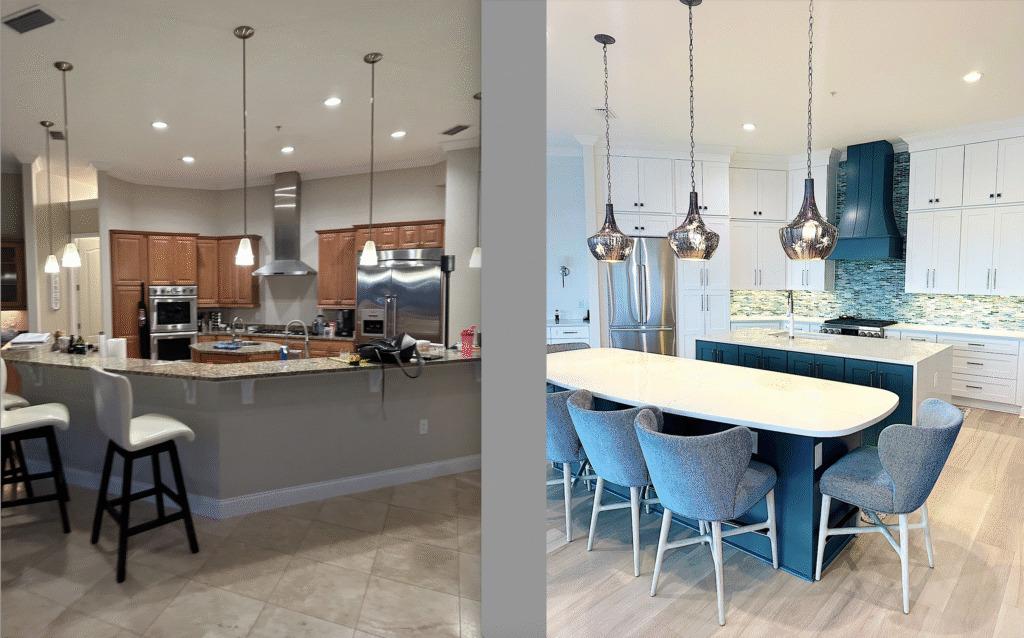
You’ve seen the shows—an entire home transformed in under an hour. Fun to watch, but far from reality. In truth, home remodel timelines are complex, layered, and often longer than homeowners expect.
As a designer who has walked hundreds of clients through this journey, I can tell you: remodels don’t have to be chaotic if you understand the phases and plan accordingly. In this blog (inspired by a recent episode of my Designing in 5D podcast), we’ll break down each stage of a remodel, common misconceptions, and the smartest ways to stay on track.
Misconceptions About Remodel Timelines
The first big misconception is believing that the end date your contractor gives you is guaranteed. While it’s a starting point, reality is rarely that simple. Lead times, contractor schedules, and unexpected surprises (think hidden HVAC systems or discontinued materials) often shift the schedule.
Another common misunderstanding? Assuming you can live in your home comfortably during a major remodel. Technically possible—practically miserable. Dust, noise, and constant disruptions strain even the best relationships. Preparing for temporary housing or phased living solutions is key to keeping your sanity intact.
Phase 1: Discovery & Pre-Planning (2–6+ weeks)
The remodel process begins long before demo day. In this phase, we explore your goals, gather inspiration, create function-first floor plans, and align early budgets.
Why this matters: without clear pre-planning, you risk designing something you can’t afford—or worse, redoing work later. This is also when we set realistic expectations for cost and timing.
Phase 2: Design Selections & Rounds (3–8+ weeks)
Once the floor plan works, we move into selections. This is where inspiration boards become tangible—choosing materials, finishes, lighting, cabinetry, and more.
At Elizabeth Erin Designs, our goal is that your first design presentation is ~65% complete. That means we’re close enough to capture your vision, but flexible enough to refine. Samples, revisions, and edits take time, but thoughtful selection now prevents costly mistakes later.
Tip: Expect us to go “quiet” while we order samples and prepare presentations. Silence here means progress.
Phase 3: Contractor Bids & Value Engineering (2–4+ weeks)
Here’s where design meets dollars. Contractors provide bids based on the design package, and together we compare costs to your budget.
This is also where value engineering enters the picture. Done well, it’s not about cutting corners—it’s about making smart swaps that protect both quality and budget. For example, shifting from a custom cabinet color to a standard option can save thousands without changing the look.
Our rule of thumb: you can have two out of three—quality, budget, or speed—but never all three at once.
Phase 4: Construction & Concierge (Varies by scope)
Once construction begins, the real test starts. Weekly walkthroughs, site checks, and constant communication ensure fewer surprises. This is where our concierge service bridges the gap between contractors and clients—helping you feel informed without being overwhelmed.
Why it matters: A design firm that stays engaged during construction prevents miscommunication and protects your investment.
The Emotional Rollercoaster of Remodels
Remodels aren’t just physical—they’re emotional. Clients often start on a high (“Demo Day!”), dip when delays or surprises appear, and rise again as finishes come together.
The key? Setting expectations early. At EED, we remind clients: expect bumps, but know we’ll navigate them together. With open communication and thoughtful planning, the end result almost always surpasses the first vision.
Contingency: Your Secret Weapon
No remodel is immune to surprises. That’s why we always recommend building in a 10% contingency. For a $250,000 remodel, that’s $25,000 set aside for hidden issues or last-minute upgrades. If you don’t use it? Consider it future design funds.
Conclusion: Designing a Timeline That Works
When it comes to home remodel timelines, the secret isn’t speed—it’s strategy. Pre-planning, clear budgets, phased design work, contractor collaboration, and contingency funds all combine to make the process smoother, calmer, and ultimately more rewarding.
If you’re considering a remodel, give yourself permission to slow down and plan well from the start. It’s the difference between a stressful experience and a transformative one.
Ready to see how remodel timelines could work for your project?
Contact us today: https://elizabetherindesigns.com/contact/
Visit our residential portfolio: https://elizabetherindesigns.com/residential/